
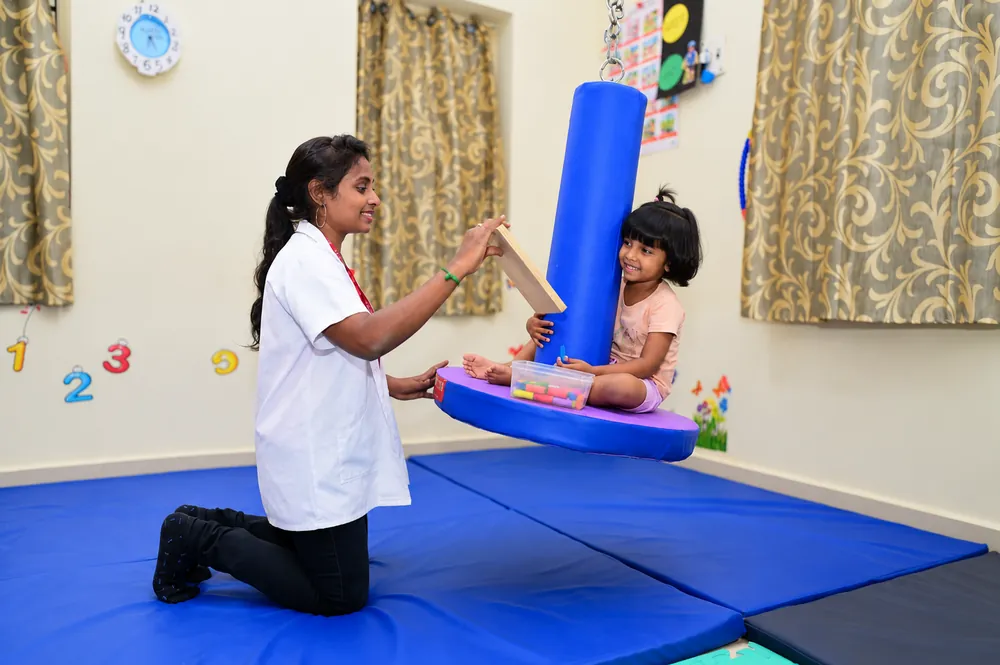
What sensory integration therapy at Mirth covers
Every plan is built around your child's assessment, so the focus areas below are tailored to the goals we set together.
Sensory Assessment
Understanding how your child takes in and responds to touch, sound, sight and movement.
- Detailed sensory profile and observation.
- Identifies sensory-seeking and sensory-avoiding patterns.
- Links sensory needs to behaviour, attention and learning.
- Clear explanation of findings for parents.
Sensory Integration Therapy
Helping children process and respond to sensory input so they feel calm, focused and ready to learn.
- Addresses tactile, auditory, visual and vestibular sensitivities.
- Improves body awareness, balance and coordination.
- Reduces sensory-seeking and sensory-avoiding behaviours.
- Builds tolerance for loud noises, crowds and new places.
Self-Regulation & Sensory Diet
Practical strategies that help your child stay calm and regulated throughout the day.
- A personalised sensory diet for home and school.
- Calming and alerting activities built into daily routines.
- Better attention, sitting tolerance and transitions.
- Helping parents spot and respond to sensory overload.
Signs your child may benefit from sensory integration therapy
- Covers their ears at everyday sounds or gets upset in crowds
- Dislikes certain clothes, textures or messy play
- Constantly seeks movement: spinning, jumping, crashing or climbing
- Avoids swings, slides or having their feet off the ground
- Is a very picky eater because of food textures
- Finds it hard to calm down after becoming upset or excited
Every child develops at their own pace. If something on this list sounds familiar, a consultation is a simple first step to understand what support, if any, your child needs.
At a glance
- Our centresT. Nagar & Medavakkam, Chennai
- OpenMonday – Saturday, 9:30 AM – 8:00 PM
- First stepConsultation and detailed assessment
- ParentsInvolved at every step, with home strategies
How it works at Mirth
All the professionals your child needs work together under one roof, so you always have one point of contact.
Step 1First Consultation
Step 2Assessment & Observation
Step 3Goals & Therapy Plan
Step 4Sessions & Reviews
Sensory Integration Therapy: frequently asked questions
What are sensory processing difficulties?
Some children find it hard to take in and respond to information from their senses, such as touch, sound, sight and movement. They may over-react and avoid certain sensations, or under-react and constantly seek more. This can affect behaviour, attention and learning.
What is a sensory diet?
A sensory diet is a personalised plan of calming and alerting activities built into your child's daily routine at home and school. It helps your child stay calm, focused and regulated throughout the day.
How do you assess my child's sensory needs?
We complete a detailed sensory profile and observe your child during play to identify sensory-seeking and sensory-avoiding patterns. We then explain the findings to you clearly and show how they link to your child's behaviour, attention and learning.
Related services
Many children benefit from more than one therapy. Our team plans every child's goals together.
Not sure where to start?
Book a first consultation with our senior child psychologist / child development specialist. We will understand your concerns and guide you to the right therapies.
Book an Assessment Call +91 82481 59625